
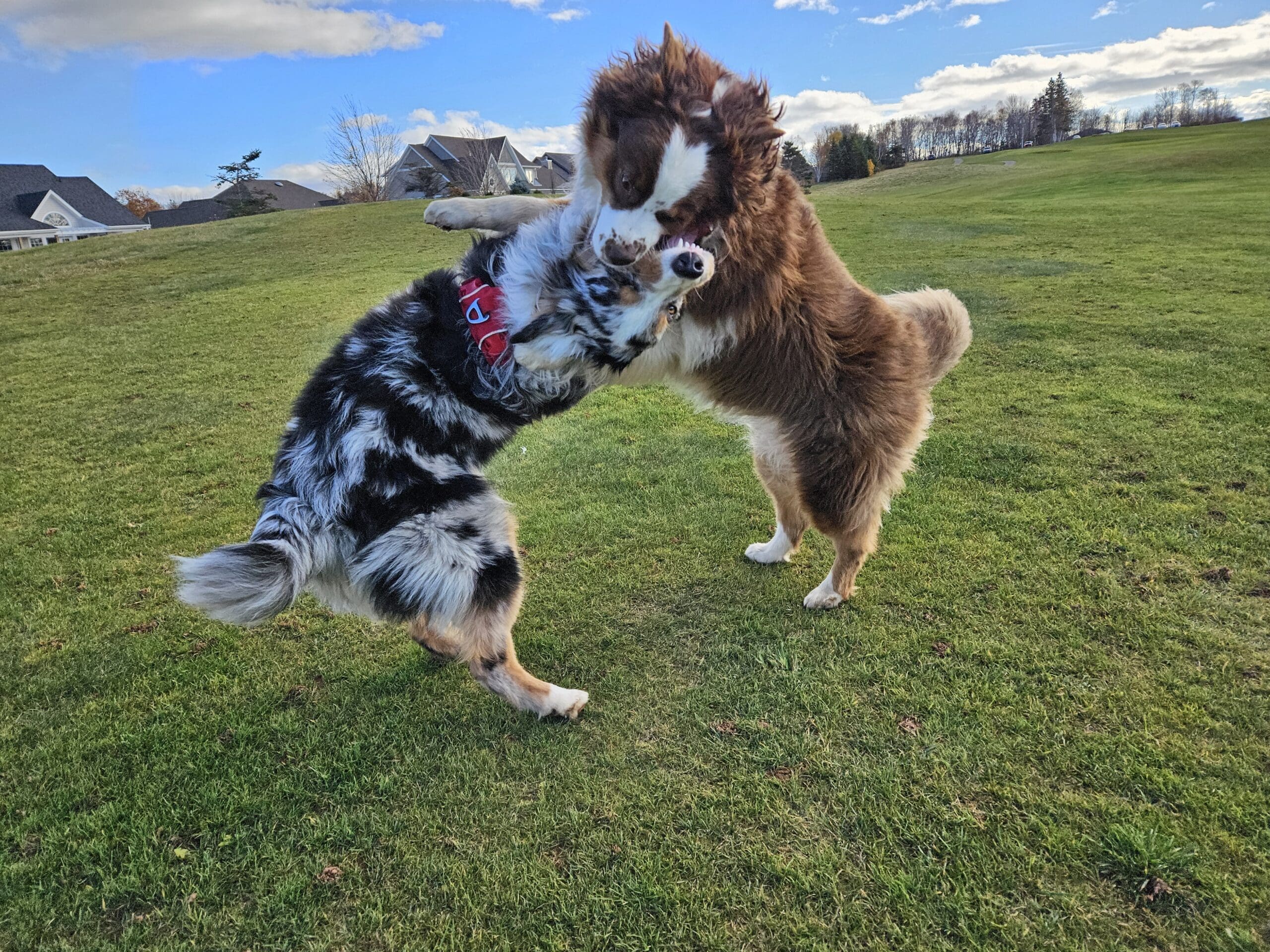
Doggy Play: Everything You Ever Wanted to Know
Date: 2024-11-14 | Author: Beth Dowbiggin
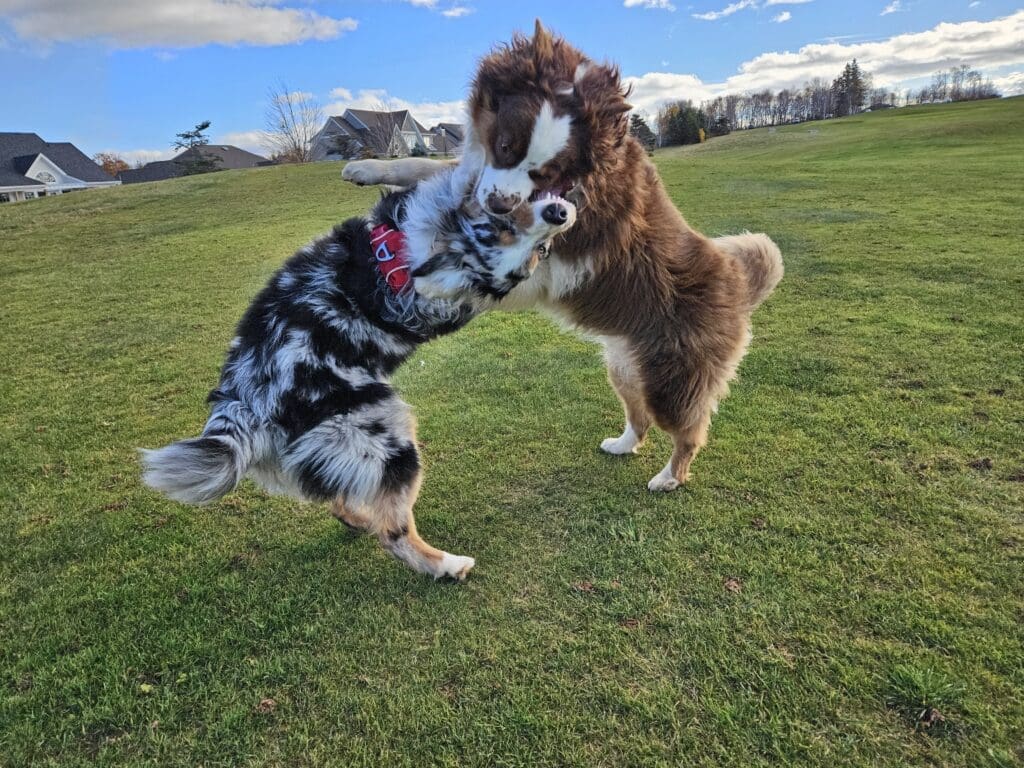
For many dog guardians, nothing beats watching their dogs bounce around and wrestle with another dog. But have you ever watched two dogs play together and wondered, “what the heck is happening?!” In fact, doggy play is incredibly complex and intricate: it may look like tackle football, but it’s actually more like chess.
What Does Science Say About Why Dogs Play?
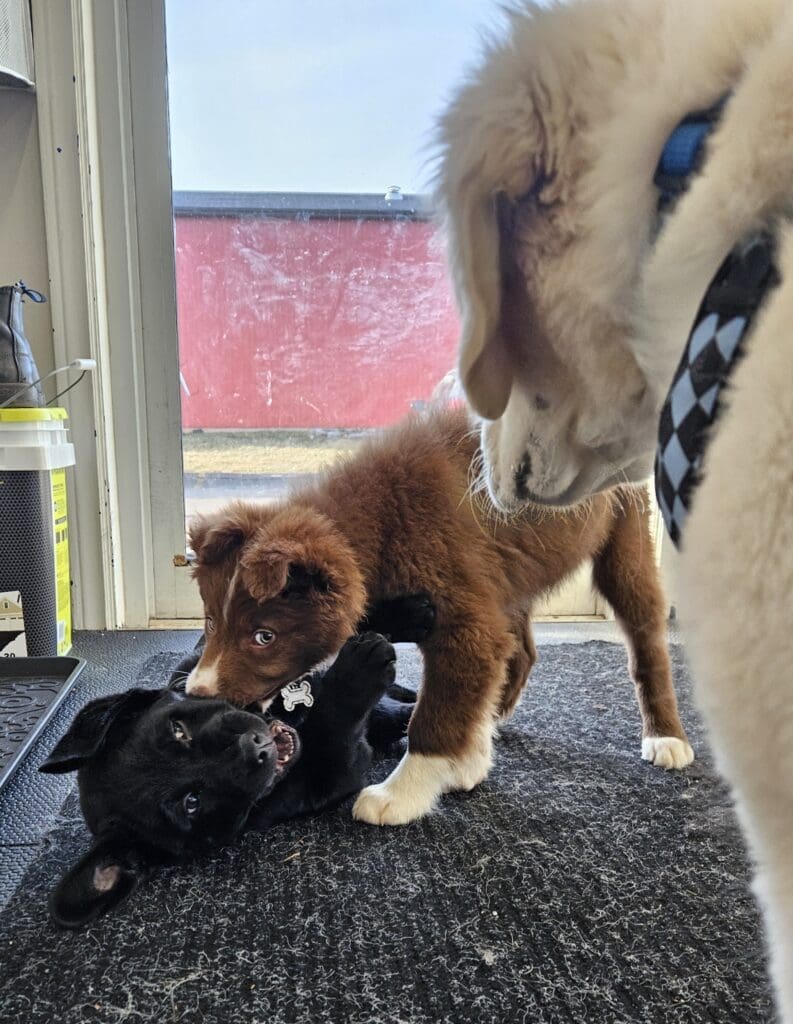
Dog-dog play is characterized by natural canine behaviours, such as stalking, hunting, or fighting, performed out of context. The dogs are playing make-believe: they are practicing real-life skills in lighthearted, unserious scenarios. Ultimately, dogs play because it helps them learn motor skills, build social cohesion and prepare for unexpected things to happen so they can cope better when they do.
Benefits of Play
- Play helps dogs let loose and feel comfortable in their environment.
- Dogs are intelligent creatures, and play is one way they learn to problem-solve.
- Engaging in play releases endorphins.
- Through play, dogs learn when they are being too rough or too soft.
- Dogs learn to read each other’s body language.
Green Flags: What Does Good Play Look Like?
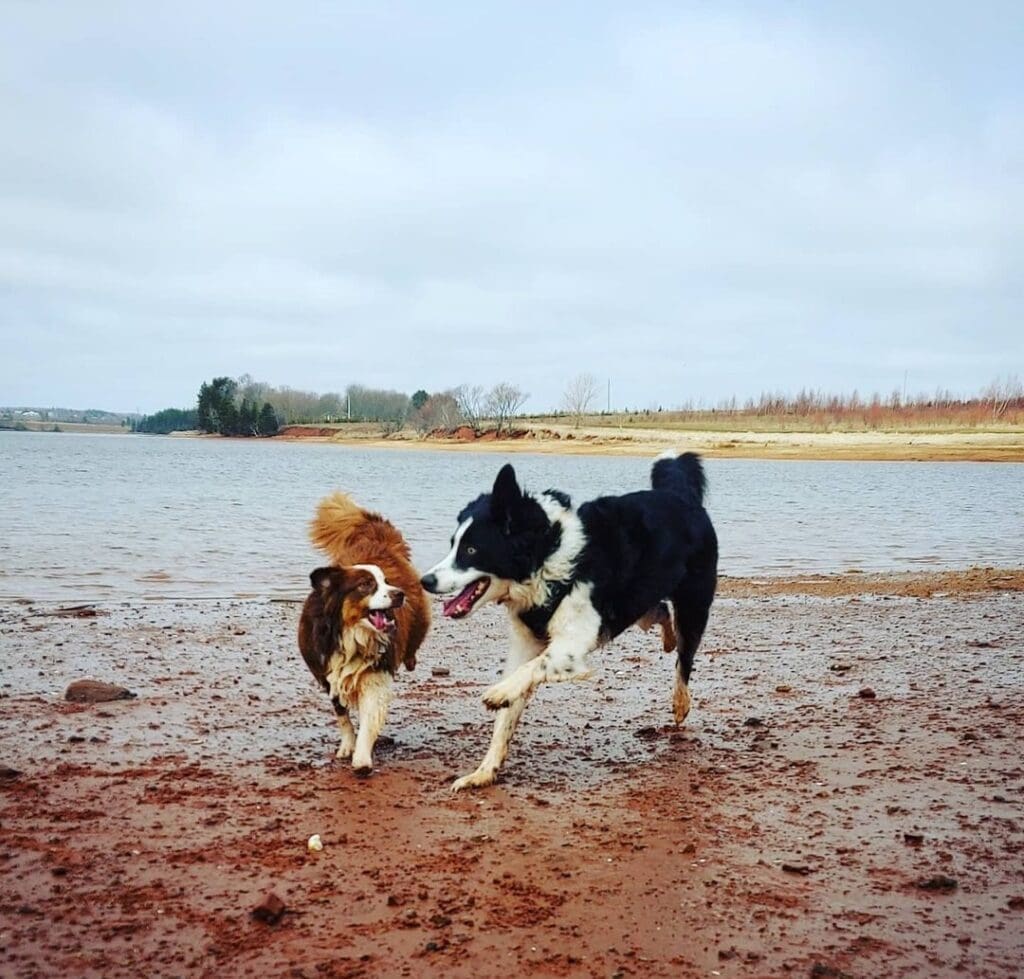
- – Play should be approximately equal between the two dogs. They should take turns chasing, pinning, mouthing, etc.
- Play that goes on for longer than 30 seconds to 1 minute without a break is a red flag.
- One of the most recognizable play signals, the play bow invites another dog to engage.
- The dog’s jaws are loosely open and relaxed, their tongue may be lolling out.
- Exaggerated, bouncing movements signal a playful mood. Body language should be loose and wiggly.
- Light bites or mock chases are natural play behaviours.
- (especially during chase).
- The dogs inhibit the intensity of certain behaviours.
Red Flags: What to Avoid During Play
- Escape or avoidance tactics: if one dog runs and hides behind a human, they are asking for space.
- Group chase or 2-on-1 play: dogs do not like to feel like they’re being ganged up on.
- Yelping: a clear sign that a dog has been hurt.
- Lack of breaks: arguably the biggest sign of unsafe play.
- Escalating growling, barking, or other vocalizations.
- Hard staring: if a dog’s mouth is closed and they are staring intently, they do not want to play.
- Stiff, tense body language and slow, stalky movement.
- Body slamming: can cause injuries and is often a sign of over-arousal.
- Relentless chasing with no role reversal or self-handicapping.
If you notice any of these red flags during play, break up the dogs immediately. Do not let the dogs “work it out on their own.”


Be the first to comment